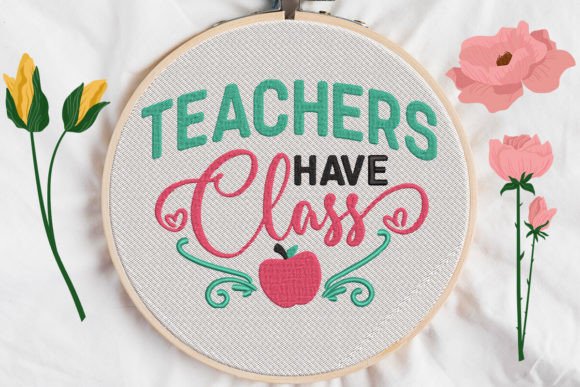
Review: Teachers Have Class Embroidery Design
As an embroidery designer who spends countless hours refining stitch patterns and testing thread combinations, I am always on the lookout for designs that balance personality with professionalism. When browsing Creative Fabrica embroidery collections for my next boutique apparel drop, I recently came across a file titled Teachers Have Class. On paper, it sounds like a standard school-themed graphic, but in practice, the execution of a machine embroidery design can make or break a garment’s perceived value. Below is my professional review of this embroidery file, focusing on how it performs when applied to sweatshirts, hoodies, and custom apparel for small businesses.
First Impressions and Visual Personality
The name Teachers Have Class suggests a blend of wit and authority. From a design perspective, this duality is crucial for apparel that needs to appeal to educators without looking childish or overly rigid. My initial assessment of the visual mood leans toward playful yet classic. The typography appears to have enough weight to stand out against fabric textures, which is essential for legibility in finished products.
For boutique brands targeting the education sector, the aesthetic feels versatile. It avoids being too cute or too severe. Instead, it strikes a tone that is trendy enough for social media graphics but substantial enough for a high-quality handmade product. The decorative strength lies in its simplicity; it does not rely on excessive detailing that might get lost in thick fleece, making it a smart choice for sweatshirt embroidery where clarity is key.
Performance on Apparel and Accessories
When planning a collection, versatility is everything. Here is how I envision Teachers Have Class performing across various garments and accessories:
- Sweatshirt Embroidery: This is the primary use case. On neutral-colored crewnecks or pullovers, the design offers a clean, premium look. The contrast between the thread and the fabric texture will highlight the lettering effectively.
- Hoodie Chest Placement: For a hoodie design, placing this on the left chest creates a subtle, professional accent. It works well for staff uniforms or casual Friday wear in schools.
- Oversized Garments: With the current trend of oversized fits, the design’s visual weight ensures it doesn’t get swallowed by extra fabric. It maintains its presence even on looser cuts.
- Tote Bags: As a machine embroidery design for canvas totes, it serves as excellent boutique merchandise. The sturdy nature of tote bags complements the likely dense stitching required for text-based designs.
- Denim Jackets: For a more rugged look, applying this to denim adds a touch of softness to the hard fabric. It pairs well with pastel or light-wash denim for a youthful vibe.
- Cozy Seasonal Outfits: In autumn or winter collections, this design fits seamlessly into "back to school" themes, offering a wearable way to celebrate the season.
Strategic Use Cases for Digital Sellers
For Etsy sellers and digital sellers, the application of this design extends beyond physical goods. A well-executed Teachers Have Class embroidery can elevate your brand identity significantly.
- Lifestyle Product Photos: When photographing finished goods, this design provides a focal point. It looks natural on models wearing casual attire, helping potential buyers visualize the item in their own lives.
- Printable Mockups: If you sell digital templates, this design can be integrated into mockup files, allowing customers to see how it would look on different garment colors before purchasing.
- Social Media Graphics: High-resolution scans of the embroidery can be used in Instagram posts or Pinterest pins, showcasing the texture and quality of the stitch density.
- Commercial Embroidery Products: Schools, teacher unions, and educational supply stores are prime markets. Offering this as part of a bulk order for staff gifts can drive significant volume for a small shop product.
Affecting Brand Value and Trust
In the world of custom apparel, details matter. A poorly digitized design can look messy, reducing buyer trust. However, a crisp, well-balanced Teachers Have Class design signals professionalism. It suggests that the seller cares about quality, which enhances brand identity and encourages repeat customers. Visual consistency across a line of shirts, hats, and bags builds a recognizable boutique brand that stands out in a crowded marketplace.
Where to Use the Design Carefully
Even a great design has limitations. As an experienced designer, I advise caution in the following scenarios:
- Small Chest Placement: Ensure the design is scaled appropriately. If it is too large for a standard chest pocket area, it may look cluttered.
- Dense Stitch Areas: Check the stitch density. If the design is too dense, it may cause puckering on lightweight fabrics.
- Stretchy Fabric: Avoid using this on highly elastic materials like spandex blends unless you use a strong stabilizer. The stitches may distort when the fabric stretches.
- Fleece and Ribbed Fabric: While fleece is popular for sweatshirts, the nap can hide fine details. Test on scrap fleece first. Ribbed cuffs or collars are difficult to hoop and embroider on due to curvature.
- Dark Garments: Thread color contrast is critical. Light threads on dark backgrounds require higher stitch counts to prevent show-through, which can add bulk.
- Curved Surfaces: Embroidering on curved areas like shoulders or sleeves requires advanced hooping techniques. Flat surfaces yield the best results for text-heavy designs.
- Tiny Lettering: If the design includes very small secondary text, ensure it remains legible after washing. Fine details often blur over time.
- Areas That Stretch or Wrinkle: Avoid placing the design near seams or hems where the fabric is likely to wrinkle during wear, as this can distort the embroidery.
Practical Embroidery Designer Notes
Before adding Teachers Have Class to your production queue, follow these practical steps to ensure a successful outcome:
- Test on Scrap Fabric: Always run a test stitch-out on the same type of fabric you plan to use. This reveals issues with tension or stabilizer choice early.
- Check Stabilizer Choice: The right stabilizer is non-negotiable. For knit sweatshirts, a cut-away stabilizer is usually best to prevent shifting and stretching.
- Review Thread Color Contrast: Select thread colors that pop against your garment. Neutral garments allow for bold colors, while colored garments may need contrasting neutrals.
- Confirm Hoop Size: Verify that the design dimensions fit within your machine’s maximum hoop size. You do not want to discover a size mismatch after digitizing.
- Inspect Stitch Density: Look closely at the digitization. Excessive density leads to stiff, uncomfortable garments. Ideal designs balance coverage with flexibility.
- Test on Similar Garment Fabric: Different blends (cotton vs. polyester) react differently to needles and threads. Test on a swatch from the actual blank shirt supplier.
- Compare Placement Options: Try different placements—center chest, left chest, back yoke—to see what looks most balanced on the specific garment style.
- Check Creative Fabrica Product Details: Before selling finished apparel, carefully review the licensing terms on Creative Fabrica. Ensure you have the commercial rights to produce and sell items made with this digital embroidery file.
Ultimately, Teachers Have Class is a solid addition to any educator-focused collection. Its clean aesthetic and adaptable nature make it suitable for a wide range of finished products. By paying attention to fabric choice, stabilizer selection, and proper testing, you can leverage this design to create high-quality, marketable apparel that resonates with teachers and students alike.