Teach Kindness Compassion Confidence Review
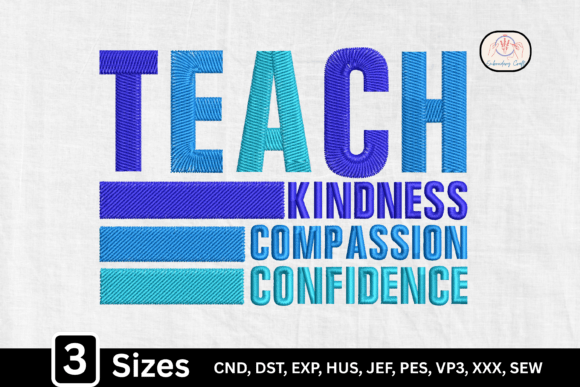
As an experienced embroidery designer, I spend my days evaluating digital files not just for their aesthetic appeal, but for their viability in commercial production. When a small business owner or Etsy seller asks me to review a design like Teach Kindness Compassion Confidence, I look beyond the pretty colors. I look at stitch density, scalability, and brand alignment. This blue gradient teacher stitch design is marketed towards the school category, but its potential extends far beyond the classroom. It is a versatile asset for any brand that wants to project warmth, reliability, and emotional intelligence.
In this review, I will break down how Teach Kindness Compassion Confidence performs as a machine embroidery design for small business merch, branded patches, and custom apparel. We will explore where it shines, where it might struggle, and how to integrate it into your product line without compromising quality.
First Impressions: Professionalism Meets Warmth
The title alone sets a specific tone. Words like "Kindness," "Compassion," and "Confidence" are powerful triggers for customer engagement. They suggest a brand that cares about its community and its employees. Visually, the description mentions a "Blue Gradient Teacher Stitch." In the world of embroidery, gradients are challenging. They require precise digitizing to ensure smooth transitions between thread colors without showing too much underlay or creating a muddy appearance.
If executed well, this design feels modern yet classic. It avoids being overly decorative or rustic, landing instead in a sweet spot of premium handmade presentation. For a boutique, a creative studio, or a local café, this design signals professionalism. It tells the customer that the business values soft skills and human connection. The blue color palette is inherently trustworthy and calming, making it an excellent choice for healthcare-adjacent businesses, educational toy brands, or wellness-focused shops.
Real-World Business Applications
So, where does Teach Kindness Compassion Confidence fit in your inventory? Here are several high-value applications based on current market trends in small business merch and custom apparel.
- Branded Patches: This design translates beautifully into iron-on or sew-on embroidered patches. These are huge sellers on Etsy and craft fairs. Customers love attaching them to denim jackets, backpacks, and tote bags. The text-heavy nature of the design works well here, provided the lettering remains legible.
- Staff Uniforms and Aprons: For a bakery, florist, or pet brand, staff wear is a walking billboard. Placing this design on the chest of a work shirt or the bib of an apron reinforces company culture. It reminds employees of the values they represent while subtly communicating those values to customers.
- Tote Bag Accents: A small embroidered patch of this design on a canvas tote bag adds significant perceived value. It elevates a basic commodity into a curated handmade product. It also serves as a great customer gift or loyalty reward.
- Cap Embroidery: The front panel of a structured cap is prime real estate. If the design’s aspect ratio allows, it can serve as a bold statement piece. However, curvature can distort text, so caution is advised (see below).
- Product Packaging: Small labels featuring this design can be attached to packaging for candles, soaps, or baked goods. It adds a tactile, personal touch that printed stickers cannot match.
Where to Exercise Caution
Not every surface is created equal. As a designer, I must warn you about the limitations of Teach Kindness Compassion Confidence when applied to certain items.
Small Patch Sizes: If you plan to scale this design down to less than 2 inches, readability will suffer. Text-based designs rely on clear contrast and spacing. Tiny lettering often merges together during the stitching process, resulting in a blob rather than words. Always test at final size.
Curved Surfaces: While caps are popular, the curve can stretch the fabric, distorting the gradient and the text. If you embroider directly onto a cap, ensure the hoop is stable and the fabric is backed with heavy stabilizer to prevent puckering.
Dark Uniforms and Fabric Texture: The description highlights a blue gradient. On dark fabrics, this may lack contrast unless you use a white underlay or a light-colored backing. Similarly, highly textured fabrics like thick fleece or rough burlap can obscure fine details. Stick to smooth cotton, polyester blends, or twill for the best results.
High Stitch Density: Designs with dense text can become stiff and uncomfortable if the stitch count is too high. Check the file specifications. If the density is excessive, consider using a lighter stabilizer or reducing the number of fill stitches, though this requires professional digitizing adjustments.
Impact on Brand Identity and Customer Trust
Using Teach Kindness Compassion Confidence is more than just adding a logo; it is a strategic branding decision. In a crowded marketplace, visual consistency builds recognition. When customers see this specific blue gradient and message repeatedly across your products—from tote bags to aprons—they begin to associate those qualities with your brand.
This design fosters buyer engagement by appealing to emotion. People buy from brands that align with their values. By displaying "Kindness" and "Compassion," you are inviting customers into a community rather than just a transaction. This can lead to higher customer retention and positive word-of-mouth marketing. Furthermore, the professional execution of the embroidery signals attention to detail, which indirectly boosts trust in the quality of your core products.
Practical Designer Notes for Production
Before you start mass-producing merchandise with this digital embroidery file, follow these essential steps to ensure a successful launch.
- Test in Black and White: Convert the design to monochrome to check contrast. If the elements don’t stand out in black and white, they won’t pop in color either.
- Check File Formats: The product includes DST, PES, EXP, and J formats. Ensure your industrial or home embroidery machine supports these. If you are using multiple machines, having multiple formats is crucial for flexibility.
- Review Thread Color Contrast: Blue on blue can be subtle. Ensure the gradient has enough tonal difference to be visible. Test the actual threads against your fabric swatches before committing to bulk orders.
- Inspect Spacing and Hoop Size: Verify that the design fits within your standard hoop sizes. If the design is large, you may need to reposition the placement or use a larger frame.
- Use Proper Stabilizer: Never skip stabilization. Use cut-away stabilizer for knits and tear-away for wovens, depending on the fabric weight. This prevents distortion and ensures the finished product looks crisp.
- Create a Printable Mockup: Before sewing, create a printable mockup to show clients or stakeholders. This helps visualize the final product on different garments and aids in approval processes.
- Confirm Commercial Licensing: Most importantly, verify the license terms. Ensure you have the right to sell physical goods made with this design. Digital assets often come with restrictions on resale.
In conclusion, Teach Kindness Compassion Confidence is a strong candidate for small business owners looking to add meaningful, high-quality embroidery to their product lines. Its emotional resonance and professional aesthetic make it suitable for a wide range of industries. By following proper testing protocols and understanding its limitations, you can leverage this design to enhance your brand identity and drive sales.